
Commercial Tankless water heaters – East TX Installation & Sizing
Endless Hot Water, Even During Your Busiest Rush
It’s Friday night and every table is full. The dish pit is backed up and employees are using multiple sinks. The last thing your kitchen needs is to run out of hot water. Continuous hot water is essential for dishwashing, handwashing, cleaning and sanitation.
A commercial tankless water heater works on demand, providing a steady supply of hot water for as long as the system is properly sized to handle the facility’s needs.
Restaurants are not the only businesses that depend on reliable hot water. Hotels, schools, institutional kitchens, breweries, bars, laundromats and other commercial facilities can have significant hot water demands throughout the day.
Is a Tankless System Right for Your Business
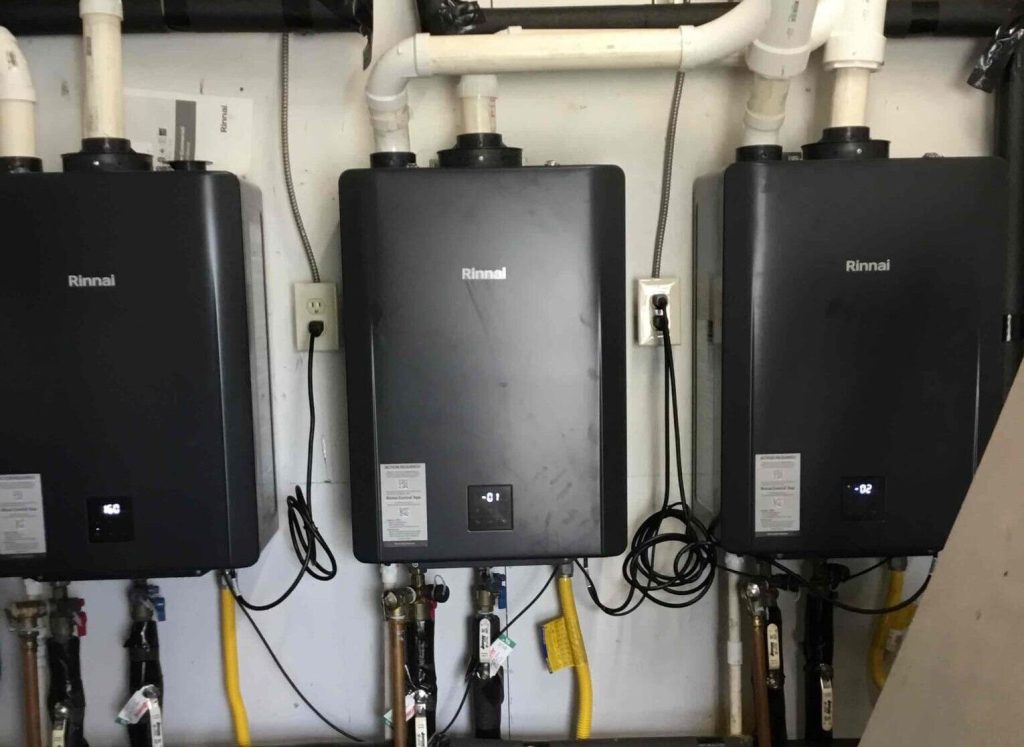
J&J Services installs tankless water heating. It is the right choice when a business has high or fluctuating hot water demand. A restaurant may have several hand sinks, a three-compartment sink, and dishwashing equipment operating at the same time. Hotels may have dozens of guests showering while the laundry is running. Other facilities may experience similar periods of heavy simultaneous demand.
A properly-sized tankless system can provide reliable hot water without maintaining a large tank of heated water around the clock, which can reduce operating costs.
The right system depends on several factors, including peak hot water usage, required water temperature, available gas or electrical capacity, incoming water temperature and available installation space.
Tankless vs. Traditional Tankless Water Heaters
A traditional commercial water heater heats and stores a predetermined amount of water, which provides a reserve of hot water, ready for use. The disadvantage is that once that supply is depleted, the business has to wait for the tank to recover.
A commercial tankless water heater works differently. Water is heated as it passes through the unit. There is no large storage tank to empty and recover. As long as demand stays within the system’s designed capacity, hot water continues flowing.
Tankless systems can save valuable floor space and eliminate much of the energy used to continually maintain the temperature of stored water.
Gas vs. Electric Commercial Tankless Units
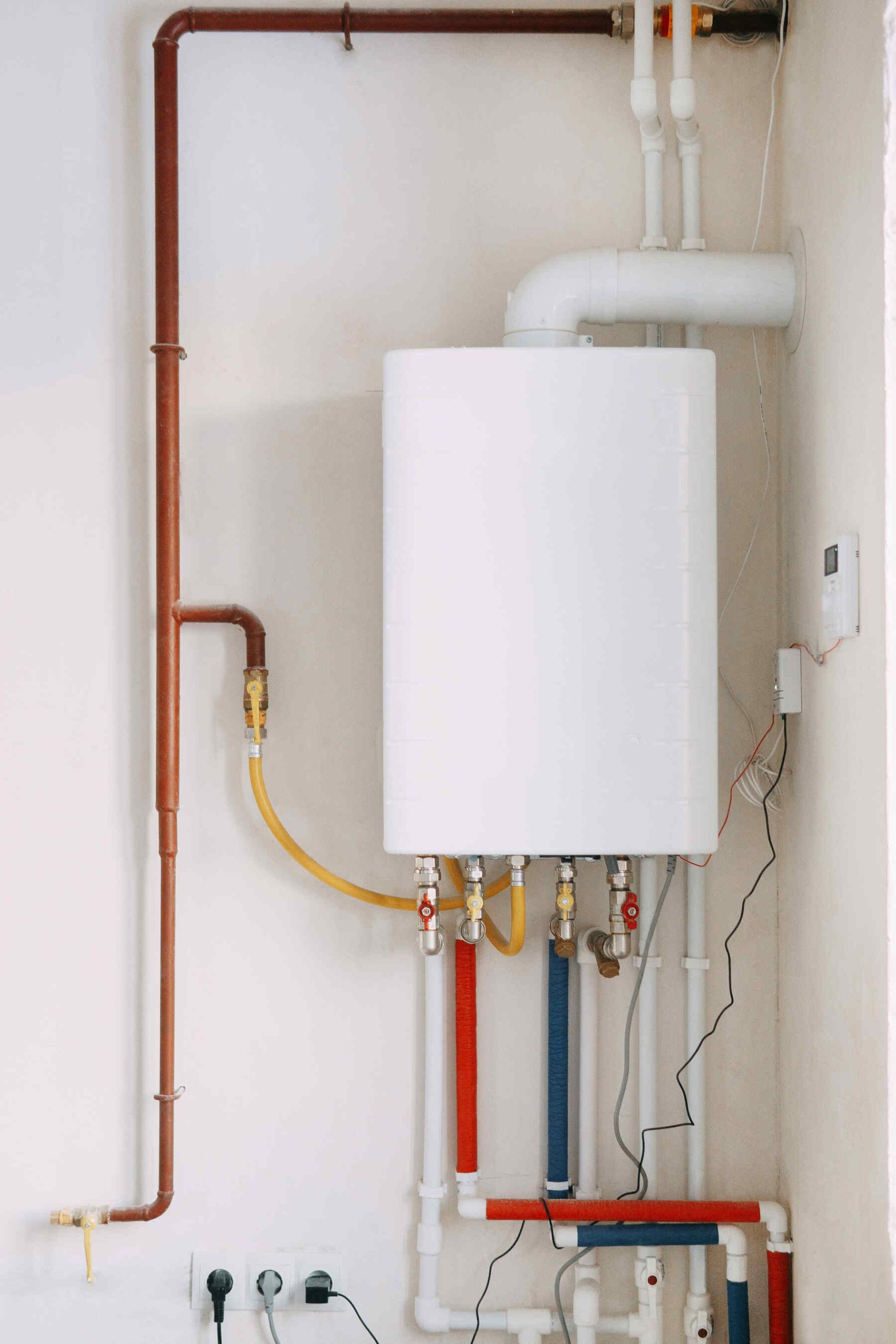
Most high-demand commercial tankless installations are gas-fired. Gas systems can produce the high heating output required when several fixtures need hot water simultaneously.
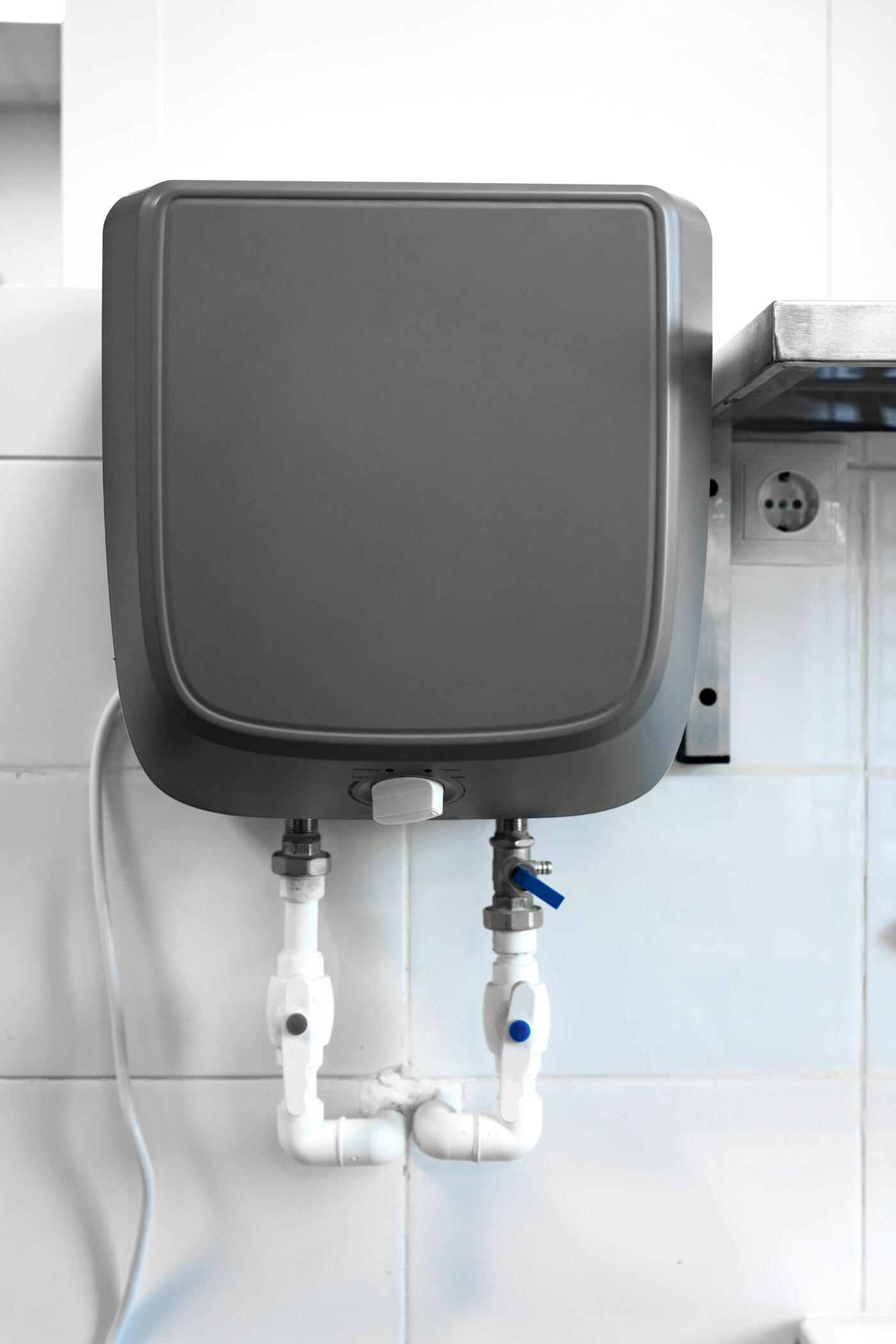
Electric tankless units can make sense for smaller applications or locations with limited demand. However, producing the same amount of hot water as a high-capacity gas system can require substantial electrical service. J&J evaluates both the hot water demand and available utilities before recommending a system.
Why Restaurants Choose Tankless
Restaurants are among the best candidates for commercial tankless water heating. Kitchens depend on it for cleaning, handwashing, dishwashing, and sanitation. A properly designed system helps ensure hot water is available during the busiest periods rather than forcing employees to work around the recovery time of an undersized storage tank.
Meeting Health Code Hot Water Requirements
Commercial kitchens have specific temperature requirements for dishwashing and sanitizing. Manual three-compartment sink wash water is generally maintained at a minimum of 110°F. When hot water immersion is used for manual sanitizing rather than a chemical sanitizer, the water must be maintained at 171°F or higher.
High-temperature mechanical dishwashing equipment has additional requirements. Depending on the machine, wash temperatures generally range from 150°F to 165°F, while most hot-water sanitizing machines require a final sanitizing rinse of at least 180°F.
That makes proper water heater sizing especially important. A commercial system needs to provide both the necessary volume and temperature when the kitchen is operating at peak demand. Applicable local requirements and equipment manufacturer specifications should also be considered.
Keeping Up During Peak Service
Unlike most homes, a restaurant kitchen may have several hot water fixtures operating simultaneously. Employees may be washing their hands while cookware is being cleaned and the dish machine is cycling.
A tankless system needs enough capacity to meet that combined peak demand. When correctly sized, it can continue producing hot water without waiting for a storage tank to recover.
Reclaiming Space in a Tight Back-of-House
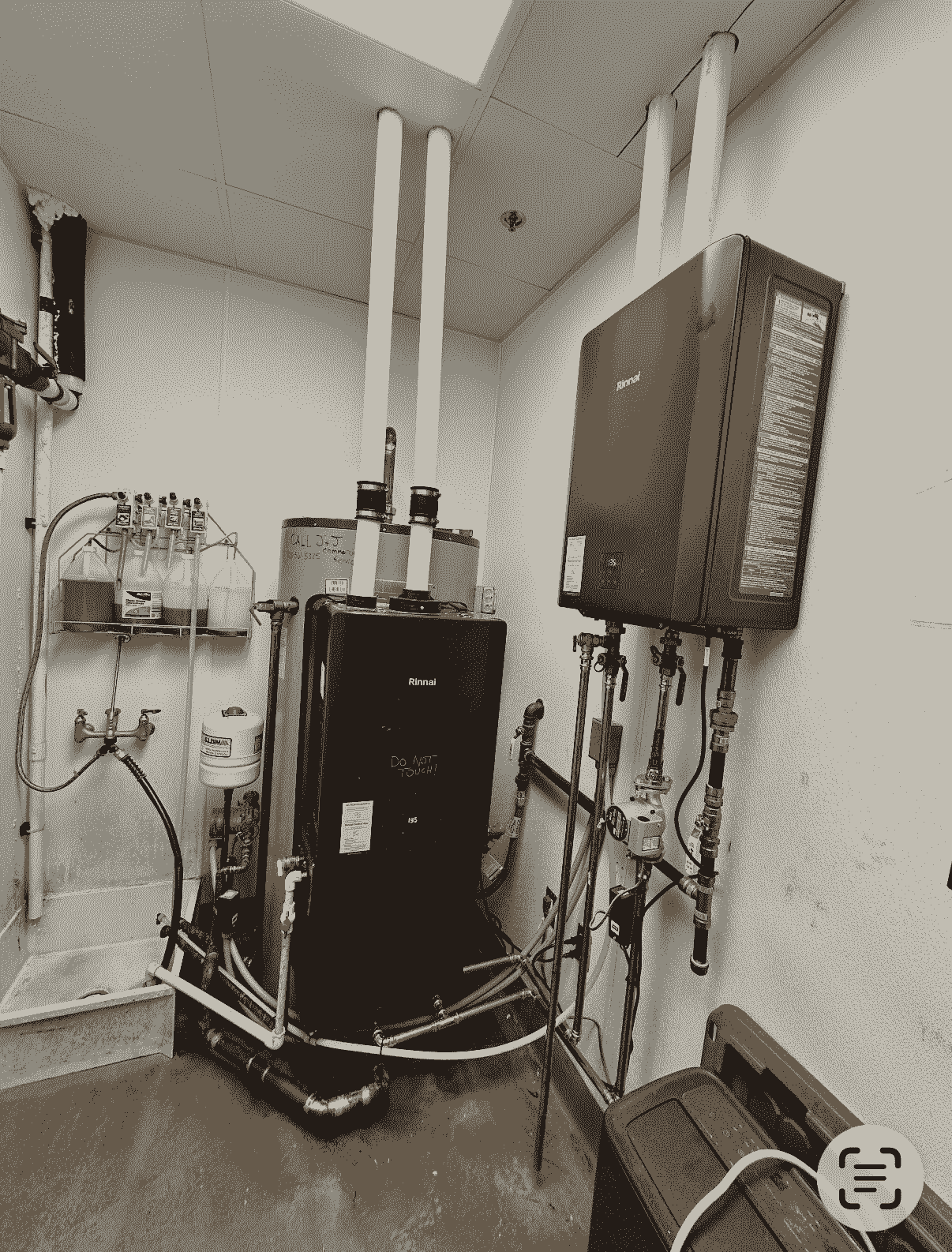
Tankless water heaters take up much less space. Large storage tanks can occupy floor space that could otherwise be used for equipment, storage or improving workflow.
Many commercial tankless systems are wall mounted. That can free up floor space without sacrificing hot water capacity, provided the system is properly designed for the facility’s demand.
Cutting Energy Costs vs. Standby Tank Loss
Traditional water heaters maintain hot water, whether the business is using it or not. As stored water loses heat, the heater cycles back on to maintain the set temperature. This is known as standby heat loss.
Tankless systems eliminate the need to continuously maintain a large volume of stored hot water. Energy is used primarily when hot water is being produced. Actual savings depend on usage patterns, equipment efficiency, fuel costs and system design, but eliminating unnecessary standby heating can make tankless attractive for many commercial applications.
Also Built for Other High-Demand Facilities
Restaurants may be an obvious application, but they are far from the only businesses that can benefit from commercial tankless water heater installation. Any facility with periods of high or simultaneous hot water demand may be a candidate.
Hotels & Hospitality
Guests expect hot showers regardless of how many other people are using hot water. At the same time, housekeeping operations may be washing towels, sheets or other linens.
Tankless systems, particularly cascaded multi-unit systems, can be designed to handle the simultaneous demand created during busy morning and evening periods. Multiple units can work together as demand increases.
Schools & Institutional Kitchens
School cafeterias and institutional kitchens face many of the same dishwashing, cleaning and sanitation demands as restaurants. The difference is that much of the workload may occur during high-traffic breakfast and lunch periods.
A properly sized commercial tankless system can provide the hot water needed during those peak periods, helping the kitchen stay on schedule and meet applicable sanitation requirements.
Breweries, Bars & Laundromats
Breweries use hot water for cleaning and sanitizing brewing equipment, vessels and other surfaces. Bars need dependable hot water for glassware, sinks and general cleaning.
Laundromats have an equally obvious requirement. Customers expect hot water when they select a hot wash cycle. If a laundromat cannot provide it consistently, those customers have plenty of incentive to find another place to wash their clothes.
Sizing Your System the Right Way
One of the most common mistakes in a commercial tankless water heater installation is under sizing the equipment for actual peak demand.
A system may work perfectly during slower periods but struggle when several fixtures call for hot water at the same time. J&J Commercial Services has experience evaluating commercial hot water requirements and properly sizing systems for restaurants and other East Texas businesses.
Calculating Peak GPM for Your Kitchen
Tankless sizing starts with gallons per minute (GPM) rather than tank capacity.
Every fixture or piece of equipment that could reasonably use hot water at the same time during the busiest period needs to be considered. J&J evaluates the combined flow rate along with the required temperature rise between incoming cold water and the desired outgoing temperature.
We also look at how your facility actually operates. Proper sizing involves more than reading numbers from a specification sheet. Equipment, schedules, simultaneous demand, seasonal incoming water temperatures and the way employees use hot water all affect real-world requirements.
When You Need a Cascaded/Multi-Unit System
Some restaurants and larger commercial facilities require more hot water than a single tankless unit can efficiently provide.
A cascaded tankless system connects multiple units so they can work together. As demand increases, additional units can activate to provide the necessary capacity. When demand decreases, fewer units are needed.
This approach can provide both higher capacity and flexibility for facilities with significant variations in hot water demand.
Our Tankless Installation & Replacement Process
System Design & Sizing Consultation
J&J begins with an on-site evaluation of your facility and its peak hot water demand. We consider available fuel sources, utility capacity, existing plumbing, space constraints and the equipment that will be using hot water. From there, we can recommend a system designed around the way your business actually operates.
Professional Installation to Code
Commercial tankless installation involves more than mounting a unit and connecting water lines. Installations are performed by licensed technicians in accordance with applicable codes and manufacturer specifications.
That includes considerations such as proper venting, gas line sizing, water connections and water quality. Getting these details right during installation can have a significant impact on system reliability and long-term performance.
Ongoing Maintenance & Descaling
Commercial tankless water heaters require periodic maintenance to continue operating efficiently. Mineral buildup inside the heat exchanger can restrict flow and reduce heat transfer over time, particularly in areas with hard water.
Periodic inspection, cleaning and descaling can help protect system performance and extend equipment life. J&J does not just install commercial tankless systems. Our team can also provide the ongoing service and maintenance needed to keep them working properly.
Why East Texas Businesses Trust J&J Commercial Services
J&J Commercial Services understands that commercial plumbing problems affect more than the equipment in the back room. When a restaurant, hotel, school or other business loses hot water, operations can be disrupted.
As an East Texas company, we provide commercial customers with local service, backed by experienced technicians who understand the demands placed on restaurant and commercial plumbing systems.
Whether you are replacing an aging water heater, considering a switch to tankless or planning a new commercial facility, J&J can help determine the right equipment and capacity for the job.
We serve businesses throughout Tyler, Longview, Whitehouse, Jacksonville, Henderson, Kilgore, Marshall, Athens, Lindale and communities across East Texas.
Tankless Water Heater Systems – FAQ
Q: How many gallons per minute does a restaurant need for a tankless water heater?
A: There is no single GPM number that works for every restaurant. Sizing depends on how many fixtures and pieces of equipment may require hot water simultaneously, their combined flow rates, and the required temperature rise. J&J can calculate peak demand and size the system around your kitchen’s actual operation.
Q: Is tankless worth it for a small restaurant or café?
A: It can be. Smaller restaurants and cafés may benefit from the compact size, continuous hot water and reduced standby energy loss of a tankless system. The best choice depends on hot water demand, available utilities, installation costs and how the business uses hot water throughout the day. We can help you determine if it’s right for you.
Q: How long do commercial tankless water heaters last?
A: Service life varies based on usage, water quality, installation, and maintenance. Commercial units operate under demanding conditions, making routine inspection and descaling particularly important. A properly installed and maintained system can provide many years of reliable service.
Q: Can a tankless system meet health code hot water sanitizing requirements?
A: Yes, when the system is properly designed and sized for the application. The water heater must be capable of supplying the required flow rate at the temperatures needed by the facility’s sinks and dishwashing equipment. Local requirements and the equipment manufacturer’s specifications must also be considered.
Q: Do I need a gas line for a commercial tankless water heater?
A: Not necessarily. Both gas and electric commercial tankless systems are available. High-demand applications commonly use gas-fired equipment because matching that output with electric units can require substantial electrical capacity. J&J can evaluate your available utilities and determine which option makes sense for your facility.
Get a Free Tankless System Quote
-
Address
J & J Commercial Services
15040 HWY 110
Whitehouse TX 75791 -
Hours
Mon-Sat/8AM-5PM | Closed Sunday
- Phone