
Commercial Kitchen Equipment - Cold Side
Commercial Kitchen Equipment - Cold Side Commercial Kitchen Equipment - Hot Side
What to Do If a NET Health Inspector Tags Your Kitchen Equipment
It’s two hours before lunch. Prep is moving, the dining room is almost ready, and a NET Health inspector finds a piece of kitchen equipment that is not working as it should. A tag goes on it. Now what?
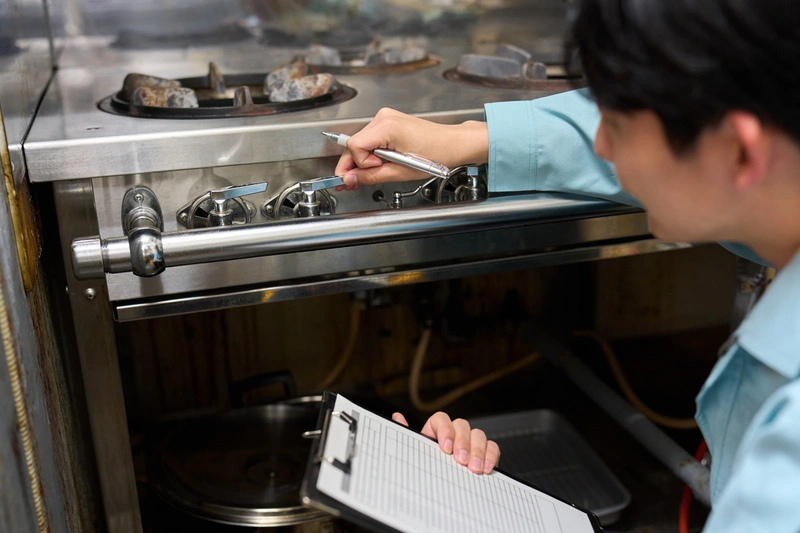
NET Health serves Tyler and Smith County. They require equipment and utensils used in food preparation, storage, and service to be kept in “good repair” and proper working condition. If NET Health does inspections at your location and your equipment does not meet that standard, J&J Commercial Services reminds you that they can tag it and forbid its use. If you are dealing with health inspector tagged equipment, your operators should treat the tag as an immediate Stop Sign 🛑.
What “Tagging” Actually Means
In plain language, a tag means NET Health has taken that piece of equipment out of service. Using tagged equipment is unlawful until NET Health approves it for use again.
J&J Commercial Services can diagnose the failure, make the repair, test the equipment, and document the work. It cannot clear the tag. NET Health is the authority that decides when tagged equipment can return to service.
Who NET Health Covers in Tyler and Smith County
The Northeast Texas Public Health District, commonly called NET Health, is the public health district serving Smith County. Its Environmental Health Department conducts retail food inspections throughout Tyler and the cities and unincorporated areas of Smith County. A restaurant outside Smith County may answer to a different health authority and different local procedures. Follow the instructions from the agency that issued your inspection report.
How Much Time You Have to Fix It
Start with the inspection report. NET Health identifies violations by category, and the category determines how quickly corrective action is required.
- Priority violations: Corrected on site or within no more than 3 calendar days.
- Priority Foundation violations: Corrected on site or within no more than 10 calendar days.
- Core violations: Corrected on site or within no more than 90 calendar days, or by the next inspection, whichever comes first.
A correction deadline does not override a tag. If NET Health has specifically tagged a piece of equipment, do not use it simply because the correction period has not expired. It stays out of service until NET Health approves its use.
When a Tag Becomes a Shutdown
One failed piece of equipment does not automatically close a kitchen. A broken mixer may create a production problem without making the entire operation unsafe. Losing the only walk-in cooler can be much more serious because potentially hazardous food may no longer be held at safe temperatures.
Conditions that can create an imminent health hazard include loss of refrigeration, sewage or wastewater problems, lack of hot water, loss of electricity, and serious pest problems. Depending on the situation, NET Health can require food service to stop until the hazard is corrected and the operation is approved to reopen.
What It Costs to Leave It Unresolved
Cost can quickly become larger than the repair. Delays can mean spoiled food, lost sales, employee downtime, repeat inspections, and a longer interruption to normal service.
Uncorrected violations can also lead to enforcement action and administrative penalties. Applicable penalties, permit fees, re-inspection fees, and other charges are governed by current law and NET Health orders. References mentioned here are based on rules and fee materials in effect as of 2026. Fees and procedures can change, so operators should confirm current amounts with NET Health.
The safest and usually least-expensive approach is to address a NET Health inspection violation immediately.
Five Steps to Get Back in Service
- J&J Commercial Services reminds you to stop using the equipment immediately. If it is refrigeration, move food to a working unit and protect safe holding temperatures.
- Read the inspection report. Write down the violation exactly as listed and note the correction deadline.
- Call for repair the same day. Give the technician the violation as written. “Not holding 41°F” and “door gasket torn” point to different problems and different repairs.
- Keep the documentation. Save the service ticket, parts invoice, photos when useful, and temperature or sanitizer logs after the repair.
- Contact NET Health. Request verification or re-inspection as directed. Do not put tagged equipment back into service until NET Health approves it.
Equipment That Gets Tagged Most Often
Reach-In and Walk-In Refrigeration
Coolers and freezers are critical because temperature problems can quickly become food-safety problems. Common failures include dirty condenser coils, failed fans, bad thermostats or controls, refrigerant problems, damaged door gaskets, icing, clogged drains, and doors that will not close or seal correctly.
For commercial kitchen equipment repair, call J&J Commercial Services for reach-ins, walk-ins, prep tables, and other commercial refrigeration equipment.
Hot Side Cooking Equipment
Ranges, fryers, ovens, griddles, steamers, steam tables, and hot-holding equipment can create inspection problems when they cannot operate safely or maintain required temperatures. Common trouble includes failed thermostats, ignition problems, damaged controls, heating-element failures, gas issues, and worn components.
J&J services commercial hot-side equipment and can diagnose the specific problem listed on the inspection report.
Dishwashing Machines
A commercial dishwasher has to do more than complete a cycle. Water temperature, sanitizer concentration, chemical feed, rinse performance, and final sanitizing conditions matter. A machine can appear to be washing dishes while still failing to sanitize them properly.
If the inspection report lists a temperature, sanitizer, drainage, or operating problem, give J&J Commercial Services the exact wording so the technician knows what condition the inspector observed.
Ice Machines
Ice is food, which makes cleanliness and sanitation especially important. Problems can include slime, scale, mineral buildup, dirty bins, contaminated internal surfaces, restricted water flow, drainage trouble, and mechanical failures. Regular cleaning, descaling, filter service, and mechanical maintenance can prevent many problems before inspection day.
How To Avoid The Tag In The First Place
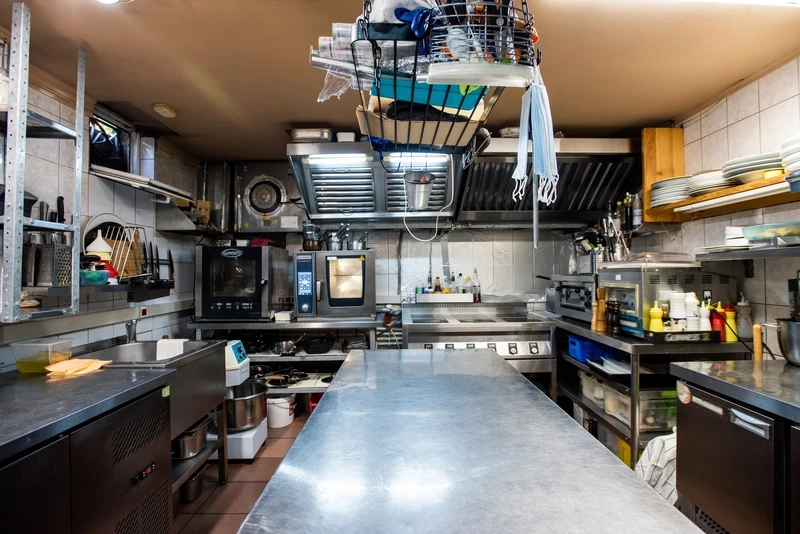
The best time to find a worn gasket, weak refrigeration system, or dishwasher sanitizer problem is before the inspector does. Preventive maintenance can catch temperature drift, scale buildup, leaks, worn components, and control problems while they are still manageable.
Regular internal checks matter, too. Record cooler and freezer temperatures. Check door seals. Verify hot-holding temperatures. Test dishwasher sanitizer or final-rinse conditions. Look inside the ice machine. Watch for leaks and damaged equipment.
Simple maintenance and inspection logs can help employees spot a developing problem and give a service technician useful information when something changes.
Frequently Asked Questions
Can a repair company remove the tag?
No. A repair company can repair and test the equipment, but only NET Health can approve tagged equipment for use again. Do not remove or ignore the tag.
How long do I have to fix the tagged equipment?
It depends on the violation. NET Health generally requires Priority violations to be corrected within 3 calendar days, Priority Foundation violations within 10 calendar days, and Core violations within 90 calendar days or by the next inspection, whichever comes first. A tagged unit still cannot be used until NET Health approves it.
Can I keep operating with one tagged piece of equipment?
Possibly. It depends on what failed and whether the rest of the operation can continue safely. A tagged mixer is different from losing refrigeration, hot water, electricity, or safe wastewater disposal. NET Health determines whether the establishment can continue operating.
Who inspects restaurants in Tyler?
NET Health’s Environmental Health Department conducts retail food inspections in Tyler and throughout Smith County.
Need Help With Failed Equipment?
If NET Health has tagged a cooler, freezer, fryer, oven, dishwasher, ice machine, or other commercial kitchen equipment, act quickly. J&J Commercial Services provides commercial kitchen equipment repair Tyler restaurants and food-service operators can call for refrigeration, hot-side equipment, dishwashing equipment, ice machines, and related commercial plumbing problems.
When you call (903) 730-6699, tell J&J Commercial Services exactly what the inspection report says. The technician can diagnose the problem, make the repair, test the equipment, and provide service documentation for your records.
After the repair, follow NET Health’s instructions for verification or re-inspection. The equipment stays out of service until NET Health approves it.